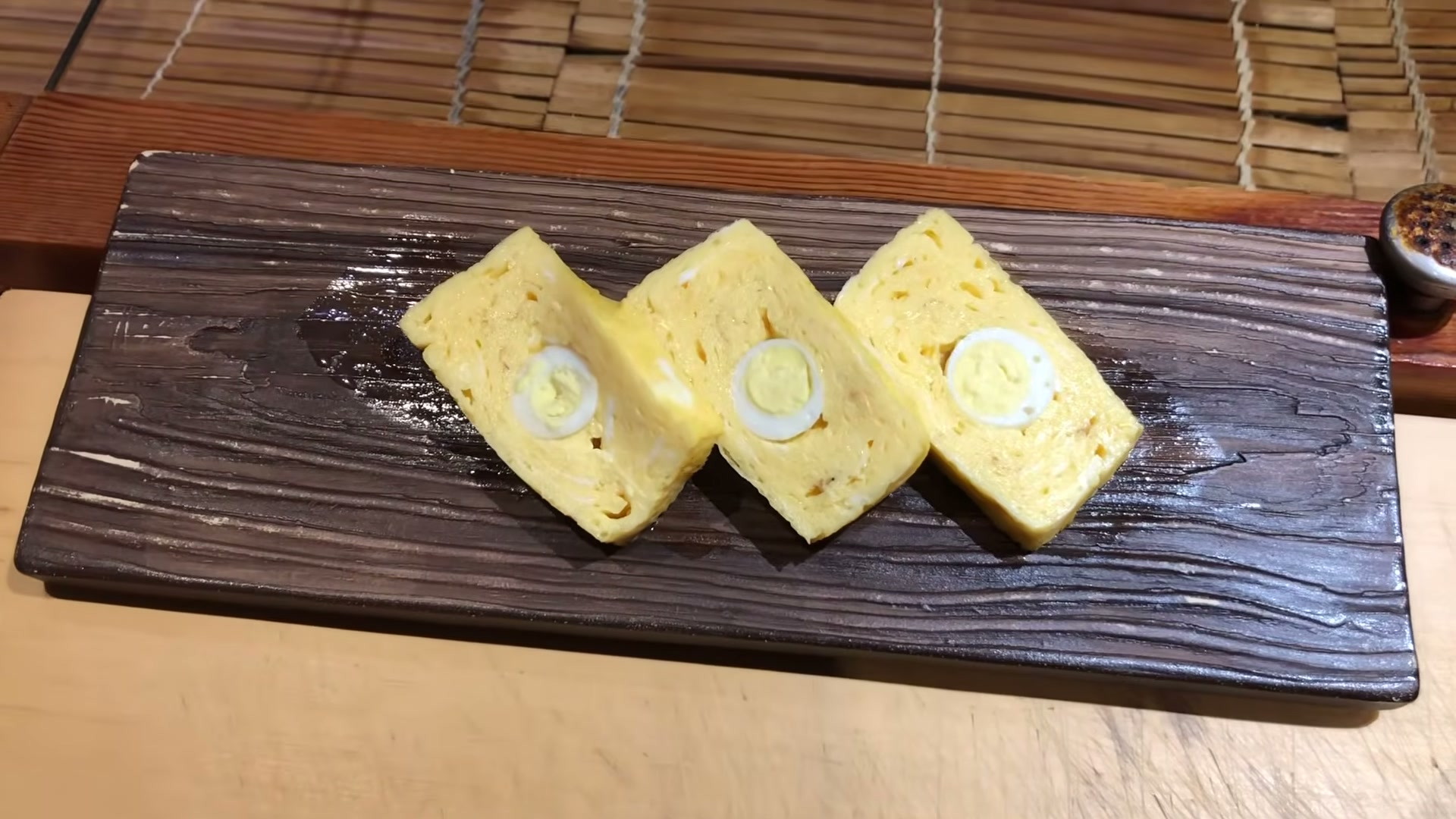
Japanese Kanto-Style Tamagoyaki
Translated from Chinese, the language of the video.
[台湾在住]寿司職人TAKAの料理日記 cooked this in a YouTube video, in Chinese. SeeMeCook wrote it up from the video as a full recipe, translated it into English, and added nutrition.
Watch the original videoImported by Anonymous on SeeMeCook
A Kanto-style Tamagoyaki recipe taught by Japanese Sushi Chef Taka, featuring a sweeter taste and rich dashi aroma. This is a fundamental Japanese dish; once you master the rolling technique, you can customize it with eel, mentaiko, or vegetables.
- Time
- 20 minutes
- Equipment
- Stovetop
- Good for
- Breakfast or snacks
- Cuisine
- East Asian
- Contains
- Eggs and alcohol
Diet and allergen details are read from the ingredient names and are not certified.
Ingredients
Steps
Prepare the egg mixture: Crack the eggs into a bowl, add dashi, mirin, sake, and sugar. The total liquid seasoning should be about 20ml per egg. Whisk until well combined.
Heat a Tamagoyaki pan and apply a generous amount of cooking oil, ensuring the entire surface is well-greased.
Pour in the first layer of egg mixture to evenly cover the bottom of the pan. When the egg is half-cooked, use chopsticks to create space between the egg and the edges of the pan for easier rolling.
Use your wrist to lift and gently shake the pan, using chopsticks to roll the egg from the far side toward you. If adding ingredients (like eel or vegetables), place them in the center of the egg layer before rolling.
Push the rolled egg to the far end of the pan and lightly grease the exposed surface again.
Pour in the next layer of egg mixture and slightly lift the existing roll with chopsticks to let the new mixture flow underneath, allowing them to bond together.
Repeat the rolling process. If air bubbles form, gently prick them with chopsticks to ensure a dense texture. Repeat until all egg mixture is used.
Finally, let the Tamagoyaki set briefly in the pan to hold its shape, then remove, slice, and serve.
Notes
1. Kanto-style Tamagoyaki is primarily sweet, while Kansai-style is saltier. 2. Beginners are advised to practice plain Tamagoyaki first before trying variations with eel, mentaiko, or spinach. 3. Using a generous amount of oil is key to success, preventing the egg from tearing and enhancing the aroma.
Nutrition
These are estimates per serving, worked out from the ingredients.
- Calories
- 264
- Protein
- 9 g
- Carbs
- 10 g
- Fat
- 22 g
- Fiber
- 0 g
Where the calories come from
Keep this recipe
Save it to your SeeMeCook library, add it to your grocery list, and cook it hands-free with each step read aloud.
Open in SeeMeCookOpen in web app