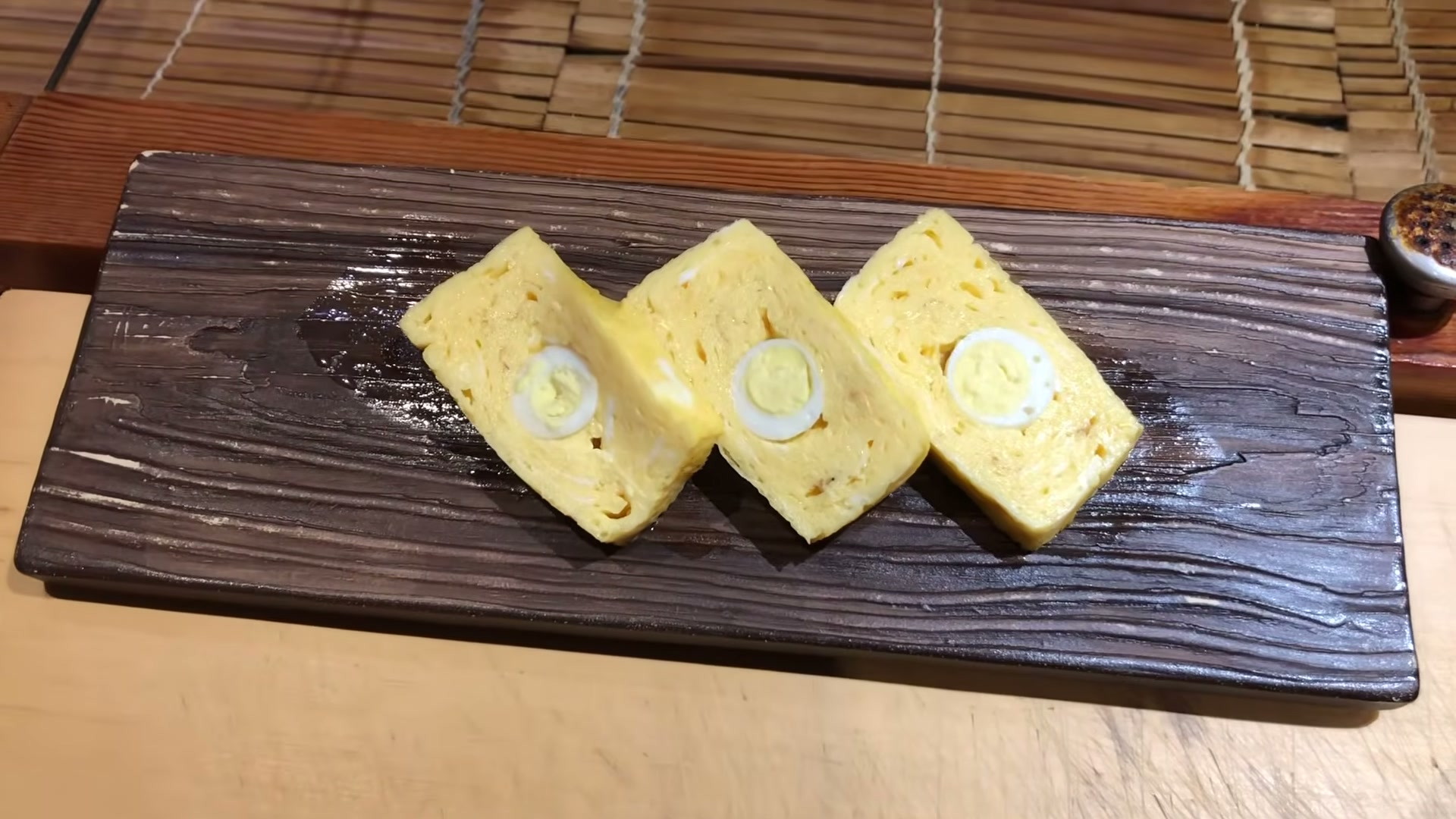
Japanese Kanto-Style Tamagoyaki (Rolled Omelet)
Translated from Chinese, the language of the video.
[台湾在住]寿司職人TAKAの料理日記 cooked this in a YouTube video, in Chinese. SeeMeCook wrote it up from the video as a full recipe, translated it into English, and added nutrition.
Watch the original videoA traditional Japanese Kanto-style rolled omelet characterized by its sweet flavor profile and tender texture, taught by a professional sushi chef.
- Time
- 20 minutes
- Equipment
- Stovetop
- Cuisine
- East Asian
- Contains
- Eggs, fish, and alcohol
- Diet
- Pescatarian
Diet and allergen details are read from the ingredient names and are not certified.
Ingredients
Steps
Prepare the egg mixture by cracking the eggs into a bowl and adding the dashi, mirin, sake, sugar, and salt.
Whisk the mixture gently to combine without creating too many air bubbles.
Heat a rectangular tamagoyaki pan over medium heat and apply a generous coating of vegetable oil using a paper towel.
Pour a thin layer of the egg mixture into the pan, tilting it to cover the entire surface.
Once the egg is partially set but still wet on top, use chopsticks to lift the edge and roll the egg toward the front of the pan.
Slide the rolled egg to the back of the pan and apply more oil to the empty space.
Pour another layer of egg mixture, making sure to lift the existing roll so the new liquid flows underneath it.
Pop any air bubbles that form with your chopsticks to ensure a dense, even texture.
Roll the egg again, incorporating the new layer into the existing roll. Repeat this process until all the egg mixture is used.
Remove the tamagoyaki from the pan and let it rest for a minute before slicing into thick pieces.
Notes
The chef notes that Kanto-style is sweeter, while Kansai-style is saltier. For beginners, it is recommended to practice with plain eggs before adding fillings like eel (unagi), mentaiko, or spinach. The ratio of liquid to egg is roughly 20ml per egg for a soft texture.
Nutrition
These are estimates per serving, worked out from the ingredients.
- Calories
- 193
- Protein
- 9 g
- Carbs
- 7 g
- Fat
- 15 g
- Fiber
- 0 g
Where the calories come from
Keep this recipe
Save it to your SeeMeCook library, add it to your grocery list, and cook it hands-free with each step read aloud.
Open in SeeMeCookOpen in web app


