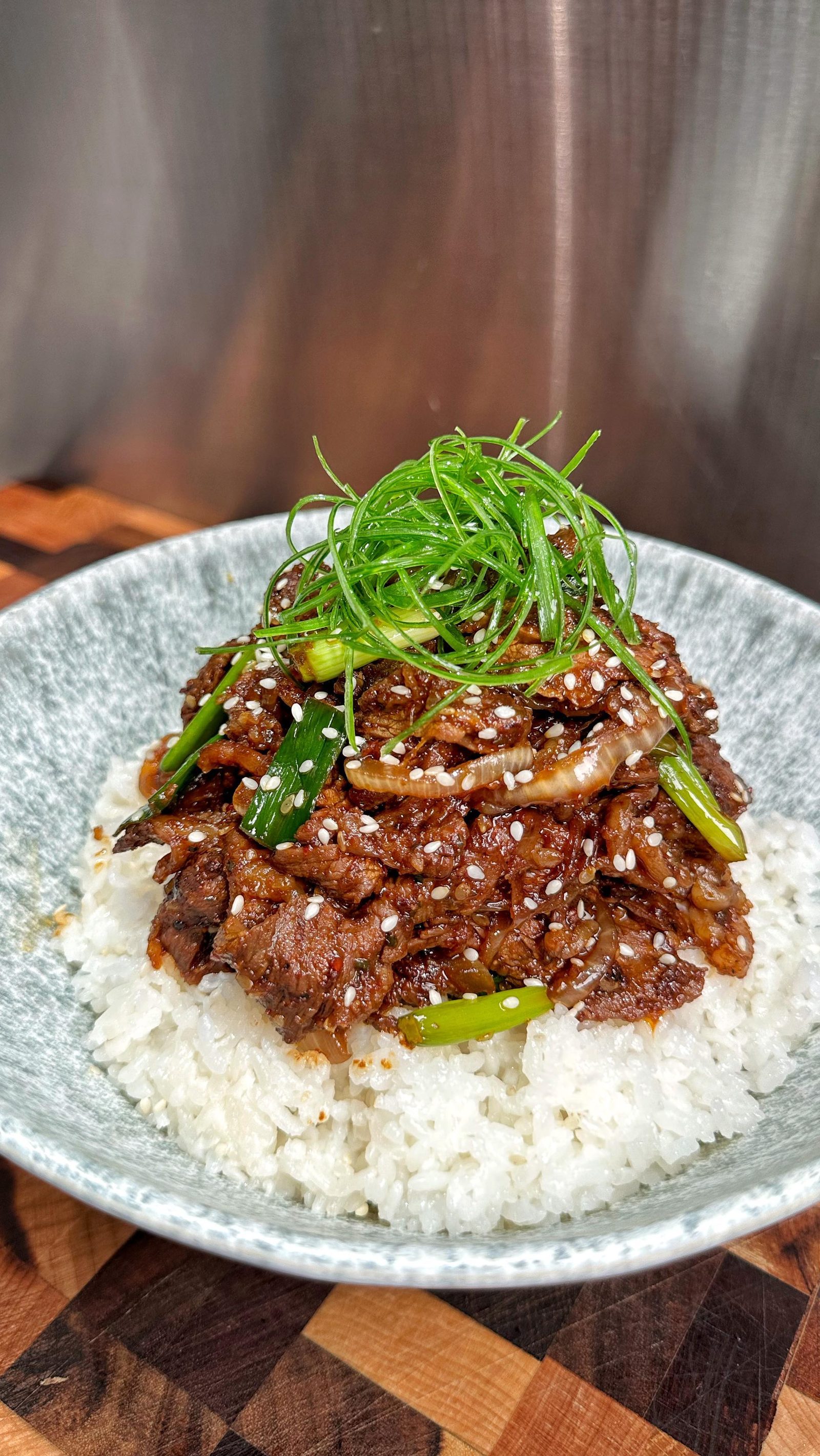
Korean Beef Bulgogi Rice Bowl
Notorious Foodie cooked this in an Instagram reel. SeeMeCook wrote it up from the reel as a full recipe and added nutrition.
Watch the original reelImported by Anonymous on SeeMeCook
A classic Korean dish featuring thinly sliced ribeye marinated in a sweet and savory soy-based sauce with Asian pear, served over seasoned sushi rice. The Asian pear acts as a natural tenderizer for the beef.
- Time
- 4 hours 45 minutes
- Equipment
- Stovetop and blender
- Good for
- Lunch or dinner
- Cuisine
- East Asian
- Contains
- Gluten, sesame, soy, and alcohol
Diet and allergen details are read from the ingredient names and are not certified.
Ingredients
Steps
Wrap the ribeye steak tightly in cling film and place it in the freezer for 2 to 4 hours until it is firm but not frozen solid.
Remove the steak from the freezer and use a very sharp knife to thinly slice the beef into even pieces.
In a blender or food processor, combine the dark soy sauce, light soy sauce, mirin, rice vinegar, honey, Gochujang, toasted sesame oil, brown sugar, grated Asian pear, sesame seeds, handful of chopped scallions, gochugaru, garlic cloves, and ginger. Blitz until smooth.
Place the sliced beef and sliced onions into a bowl and cover with the blended marinade.
Marinate the beef in the refrigerator for at least 2 hours, ideally 6 to 12 hours for the best flavor and tenderness.
Remove the beef from the refrigerator 1 hour before you plan to cook to let it come to room temperature.
Heat a cast iron pan over medium-high heat until it is just starting to smoke.
Add 2 tablespoons of neutral oil to the pan, followed by the beef. Do not overcrowd the pan; cook in batches if necessary.
Leave the beef to caramelize undisturbed for about 2 minutes.
Move the beef around the pan, add some additional chopped scallions, and continue to cook for approximately 3 more minutes.
If cooking in batches, transfer the cooked beef to a plate and cover with foil to keep warm while finishing the rest.
Serve the beef over a bowl of seasoned sushi rice. Top with extra sesame seeds and fresh scallions.
Notes
The Asian pear is essential for tenderizing the meat due to its natural enzymes. If you cannot find Asian pear, kiwi is a suitable substitute. For the sushi rice, the author recommends cooking it with a piece of kombu for extra umami.
Nutrition
These are estimates per serving, worked out from the ingredients.
- Calories
- 739
- Protein
- 37 g
- Carbs
- 64 g
- Fat
- 36 g
- Fiber
- 5 g
Where the calories come from
Keep this recipe
Save it to your SeeMeCook library, add it to your grocery list, and cook it hands-free with each step read aloud.
Open in SeeMeCookOpen in web app