Types of Apples: Which to Buy for Pie, Baking, Salads and Snacking

Buy Granny Smith for pie and baking, on its own or mixed with a sweeter Golden Delicious. Buy Honeycrisp, Gala or Fuji for eating out of hand and for salads, and Pink Lady when you want an apple that is sweet and tart at once.
Apples show up in 327 of the public recipes home cooks have saved in SeeMeCook, not counting cider vinegar, juice, applesauce and other apple products. Most of those recipes simply call for apples, but when cooks name a variety, Granny Smith comes first with 29 recipes, followed by Honeycrisp with 16, Fuji with 9 and Gala with 9.
I’m making…
Pick a dish to see which apples to buy and what home cooks have saved.
- Pie, crisp or crumble. Use Granny Smith, or mix it with a sweeter Golden Delicious, a pairing the U.S. Apple Association suggests for pies and crisps. SeeMeCook cooks also bake Pink Lady and Honeycrisp into tarts and crumbles. Read about Granny Smith. Home cooks have saved 76 apple pies, crisps, crumbles and tarts in SeeMeCook.
- Cake or bread. Use Golden Delicious, which the Washington Apple Commission calls a baking extraordinaire, or Granny Smith. The University of Missouri Extension lists both for sauce and baking. Read about Golden Delicious. Home cooks have saved 91 apple cakes, breads, muffins and other bakes in SeeMeCook.
- Salad or slaw. Use Granny Smith or Golden Delicious, which the University of Missouri Extension says resist browning after you cut them, or Honeycrisp, which the U.S. Apple Association recommends for salads. Read about Granny Smith. Home cooks have saved 20 salads and slaws made with apples in SeeMeCook.
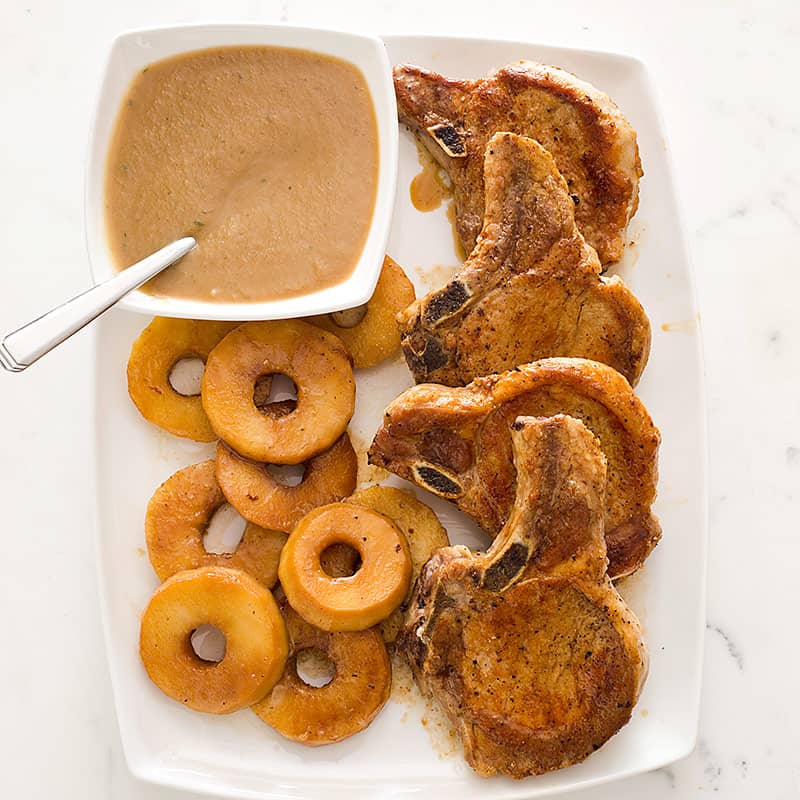
- Savory dishes. The Washington Apple Commission suggests Honeycrisp when a savory recipe needs a bright flavor. SeeMeCook cooks put Fuji in Japanese curry and Korean galbi marinade, and Gala and Golden Delicious with pork chops. Read about Fuji. Home cooks have saved 25 savory dishes with apples, such as pork, chicken and stuffing, in SeeMeCook.
Tart or sweet
Apples range from tart to sweet, and that balance shapes how an apple tastes raw and how it bakes. The University of Missouri Extension describes a well-balanced apple as one whose acids and sugars are in balance, so a very sweet apple with little acid isn’t balanced, while a tart apple can be if it is high in sugar too. The scale below follows the sweetness ratings the Washington Apple Commission gives each variety.
- Granny SmithTartGranny Smith: tart.
- Pink LadySweet-tartPink Lady: sweet-tart.
- Golden DeliciousSweetGolden Delicious: sweet.
- HoneycrispSweetHoneycrisp: sweet.
- GalaSweetGala: sweet.
- FujiVery sweetFuji: very sweet.
Apple varieties and how to use them
Granny Smith apples
Granny Smith is best for pie, baking and salads.
Granny Smith was discovered in 1868 as a chance seedling by Anne “Granny” Smith in Ryde, New South Wales. It is a hard, crisp, green apple with a very tart flavor, which the University of Missouri Extension still calls well balanced. The U.S. Apple Association says it’s an all-purpose apple that works as a snack or in pies and sauce, and the University of Missouri Extension notes that it resists browning in salads and keeps a long time.
Granny Smith appears in 29 SeeMeCook recipes, more than any other named apple. Cooks use it in cakes and other bakes (9 recipes), then pies, crisps and tarts (8) and salads and slaws (6).


Pink Lady apples
Pink Lady is best when you want an apple that is both sweet and tart.
Cripps Pink, sold under the name Pink Lady, was developed in Western Australia as a cross of Golden Delicious and Lady Williams. The Washington Apple Commission describes a sweet-tart flavor with a firm, crisp bite, high in both sugar and acid. The U.S. Apple Association lists it as available from November to August.
Pink Lady appears in only 3 SeeMeCook recipes, and all of them are apple desserts: two tartes Tatin and a crumble cake.


Golden Delicious apples
Golden Delicious is best for baking, salads and sauce.
Golden Delicious is a yellow apple, sometimes with a pink blush, with a mild, sweet, buttery flavor and nothing tart about it. The U.S. Apple Association recommends baking it into pies and crisps with a more tart apple such as Granny Smith, and Penn State Extension calls it an excellent all-purpose apple. The University of Missouri Extension rates it for fresh eating, sauce and baking, salads and freezing, and says it keeps a long time.
Golden Delicious appears in only 3 SeeMeCook recipes, among them an Italian torta di mele and French-style pork chops with apples and Calvados.

Honeycrisp apples
Honeycrisp is best for snacking and salads.
Honeycrisp was developed by the University of Minnesota as a cross of Keepsake and an unreleased Minnesota line. It has mottled red skin over a yellow background, a sweet, honeyed, mild flavor and a juicy crispness the U.S. Apple Association calls explosive. The association recommends it for snacking, salads and sauce, and notes that it stores well.
Honeycrisp appears in 16 SeeMeCook recipes. Although it is known as an eating apple, cooks bake with it most: 8 recipes are crumbles, cobblers, tarts and strudels, 7 are other bakes and only 2 are salads.


Gala apples
Gala is best for snacking and applesauce.
Gala was developed in New Zealand from a cross between Kidd’s Orange Red and Golden Delicious. The U.S. Apple Association says it is crisp, juicy, very sweet and ideal for snacking, and the Washington Apple Commission notes a hint of vanilla. Penn State Extension rates it for eating fresh and for sauce, and the University of Missouri Extension notes that it has a short storage life.
Gala appears in 9 SeeMeCook recipes, from slaw and oatmeal to cobbler and pork chops.


Fuji apples
Fuji is best when you want the sweetest apple.
Fuji was developed in Japan in the late 1930s by crossing Ralls Janet with Red Delicious, and it is named after Mount Fuji. The Washington Apple Commission calls it one of the world’s sweetest apples. Penn State Extension describes very firm, sweet fruit that stores extremely well in the refrigerator and rates it for eating fresh and for pies.
Fuji appears in 9 SeeMeCook recipes, and most of them are savory: a Japanese chicken curry, curry katsu sandwiches, a Korean galbi marinade and a ginger salad dressing.


How to buy apples
Choose apples that smell fresh and have intact stems and firm, shiny, smooth skin, and don’t buy any with bruises. Apples that are not solid red should have a yellow-green undertone, called the ground color. A ground color that is too green means the apple is less sweet or underripe, and one that is too yellow means it is overripe, soft and mealy.
How to store apples
Handle apples gently so they don’t bruise. In the refrigerator they stay crisp and juicy ten times longer than at room temperature, so store them there in a plastic bag with small air holes, where they will keep for up to a month. Don’t store them near other foods, since apples absorb odors. On the counter or in the pantry, fresh apples last about two to four weeks.
Common questions
What is the best apple for apple pie?
Granny Smith, a firm, tart apple that the U.S. Apple Association recommends for pies. The association also suggests mixing it with a sweeter Golden Delicious for pies and crisps.
Which apples do not turn brown in a salad?
The University of Missouri Extension lists Cortland, Golden Delicious, Granny Smith and Mutsu as apples that resist browning when cut.
How long do apples keep?
In a plastic bag with small air holes in the refrigerator, apples keep up to a month. On the counter or in the pantry they last about two to four weeks.
How the counts were made
Counts come from the 18,765 public recipes in SeeMeCook that are open to search engines, as of November 7, 2026. A recipe counts toward a variety when one of its ingredients names it: Granny Smith; Pink Lady or Cripps Pink; Golden Delicious; Honeycrisp; Gala; and Fuji. Apple products such as cider, vinegar, juice, sauce, butter, pie filling and spice blends are left out. McIntosh, Braeburn and Jonagold each appear in fewer than two recipes, so they have no section. A recipe that lists two varieties counts toward both. Dish counts come from recipe titles, so they are close estimates rather than exact figures, and a recipe can count toward more than one dish.
Sources
- U.S. Apple Association, apple variety pages (Granny Smith, Cripps Pink, Golden Delicious, Honeycrisp, Gala, Fuji)
- Washington Apple Commission, apple variety pages and sweetness ratings
- University of Missouri Extension, “Apple Cultivars and Their Uses” (G6022)
- University of Missouri Extension, “Picking the right apple”
- Penn State Extension, “Home Orchards Table 4-2: Non-Scab-Resistant Apple Varieties”
- Purdue Extension FoodLink, “Apple”
Save the apple recipes you want to cook
Import a supported video, recipe link or cookbook photo, then cook it one step at a time in Cooking Mode. Free to start.
Get SeeMeCook free